


Spotlight

Case Study Microsoft

How Microsoft scaled global content delivery

Find out how Microsoft used Gcore to strengthen delivery across regions.

case study ProSieben GNTM app TOPSHOT

How ProSieben scaled GNTM's app TOPSHOT

Explore how ProSieben brought real-time AI portraits to GNTM's audience.

case study Higgsfield

How Higgsfield scaled AI video generation

See how Gcore helped Higgsfield scale with GPUs and Managed Kubernetes.

case study Fawkes Games

How Fawkes Games stopped DDoS attacks

See how Gcore protected gaming servers from massive DDoS threats without disrupting gameplay.

We're hiring

Help build the next chapter of the web

We're not just filling seats. We're building a team that will write the next chapter of the internet.

  1. Home
  2. Developers
  3. Edge Redirects Without Upstream Round-Trips

Edge Redirects Without Upstream Round-Trips

  • By Gcore
  • August 21, 2026
  • 2 min read
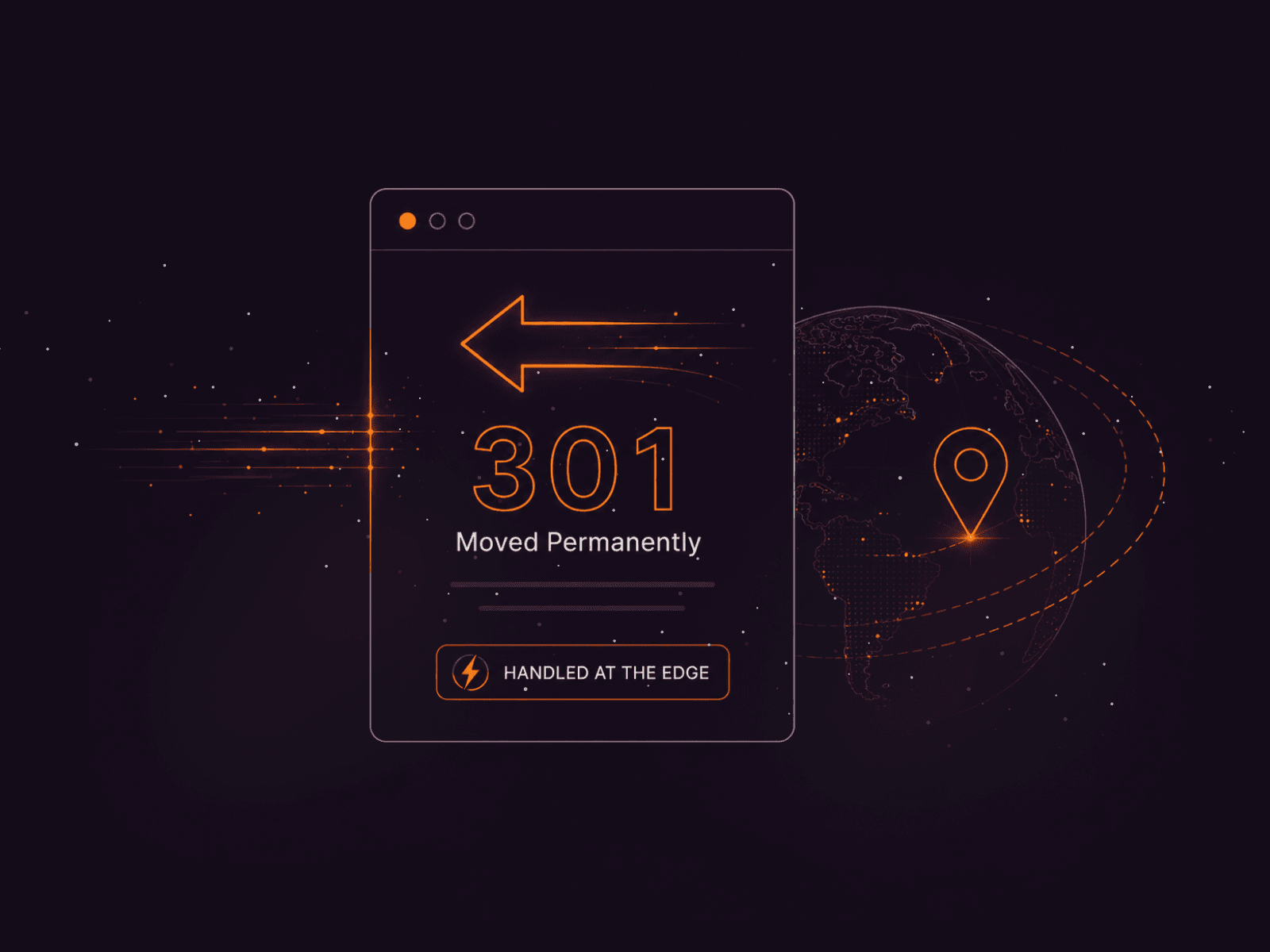
Browser window displaying '301 Moved Permanently' with a large arrow indicating redirection and a globe.

One of the most powerful features of edge computing is the ability to inspect and route traffic before it ever reaches your origin server. FastEdge gives you full programmatic control over request routing at every edge location worldwide.

In this post, we explore Edge Redirects Without Upstream Round-Trips — a core pattern for directing traffic intelligently across the global edge network. Instead of configuring complex reverse proxy rules or maintaining separate routing services, you write Rust code that compiles to WebAssembly and runs at every FastEdge point of presence.

How It Works

Handle 301/302 redirects entirely at the edge — no origin calls needed. Perfect for URL migrations, campaign links, and canonical URL enforcement.

The key advantage is latency: routing decisions happen at the edge location closest to the user, not at a centralized load balancer or origin server. For a user in Tokyo, the routing decision happens at a Tokyo PoP — the response never crosses an ocean unless it needs to.

Implementation in Rust

The FastEdge Rust SDK provides everything you need. Here is a complete routing implementation:


This pattern — matching on the request URI in a simple match block — compiles to efficient WebAssembly with no external dependencies.

For more complex routing needs, including path parameters and wildcards, consider the matchit crate, which implements a radix-tree router.

Deploying to Production

Once you've written your handler, build it and deploy via the FastEdge API:


Upload the resulting .wasm binary and attach it to your FastEdge HTTP application. The new routing logic is live across 100+ edge PoPs within seconds.

Tip: Combine routing with other edge patterns — validate JWT tokens on protected routes, add GeoIP-based redirects for international users, and cache responses all within the same worker.

Performance Characteristics

FastEdge workers cold-start in under a millisecond. A simple match-based router adds less than 1µs to request processing time.

Even with complex route tables of 50+ routes, the match overhead remains negligible compared to network latency — typically under 5µs.

Related articles
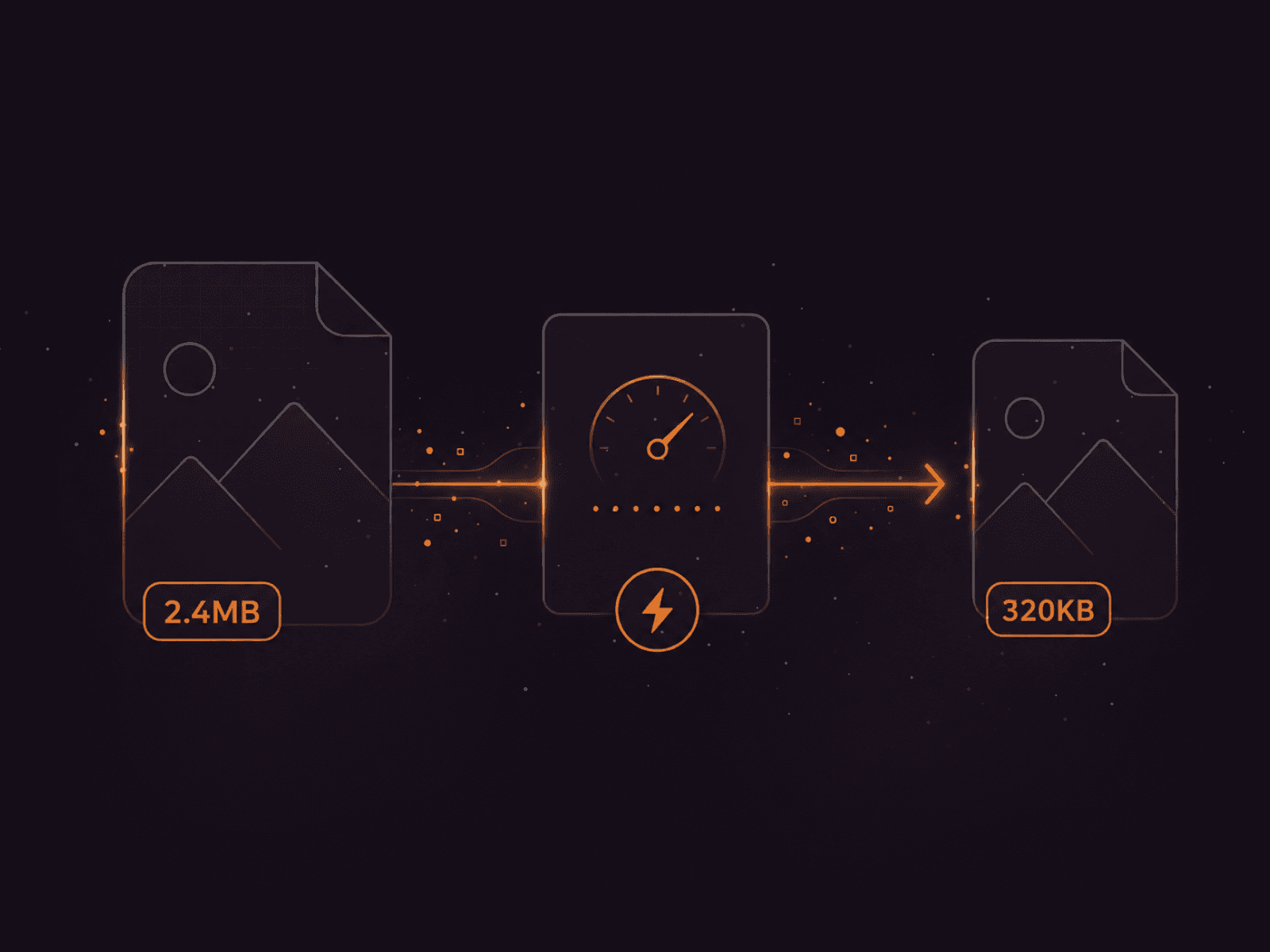
Visualizing image file size reduction from 2.4MB to 320KB through an optimization process.
On-the-fly Image Optimization at the Edge

Running compute at the edge means you can transform and optimize content before it reaches your users — with sub-millisecond cold starts and no additional infrastructure. Every FastEdge worker runs on WebAssembly, providing sandboxed, predi

Digital panel with lightning bolt icon, emitting orange data streams or energy.
Manipulating Headers at the Edge

Security at the edge means threats are stopped before they reach your infrastructure. By implementing security logic in FastEdge workers, you can validate, filter, and block requests at the closest edge location to the user — providing the

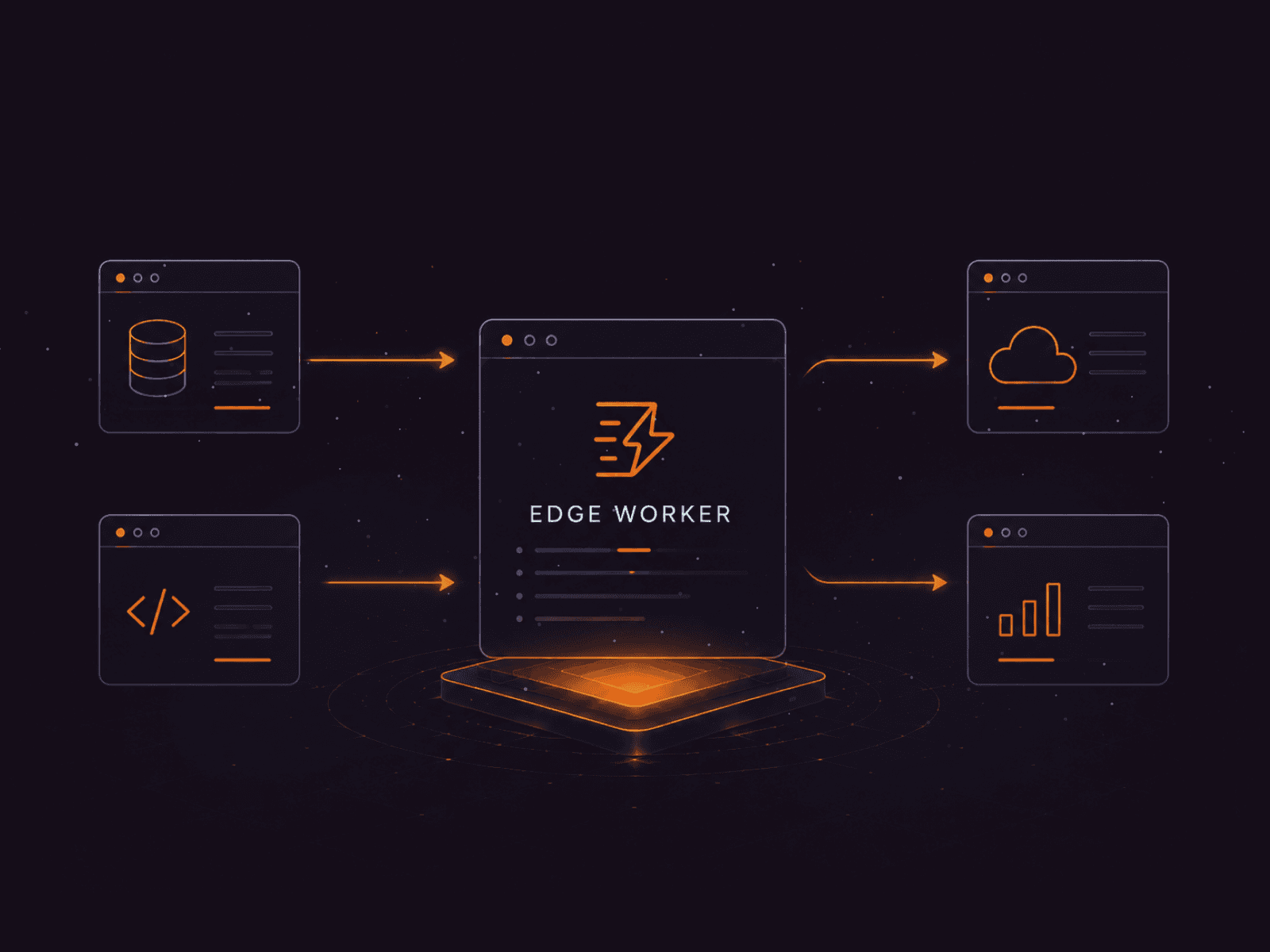
Conceptual diagram illustrating an Edge Worker connecting databases, code, cloud, and analytics.
Making Outbound Requests from the Edge

FastEdge workers aren't limited to just responding to incoming requests — they can also make outbound network requests to external services. This opens up a world of possibilities: aggregating data from multiple APIs, proxying requests to u

Central server distributes data through a network to multiple connected devices like laptops and phones.
Leverage Redis-Compatible Cache at the Edge

Running compute at the edge means you can transform and optimize content before it reaches your users — with sub-millisecond cold starts and no additional infrastructure. Every FastEdge worker runs on WebAssembly, providing sandboxed, predi

Glowing orange shield icon with a checkmark, symbolizing digital security and protection.
JWT Auth Gateway at the Edge

Security at the edge means threats are stopped before they reach your infrastructure. By implementing security logic in FastEdge workers, you can validate, filter, and block requests at the closest edge location to the user — providing the

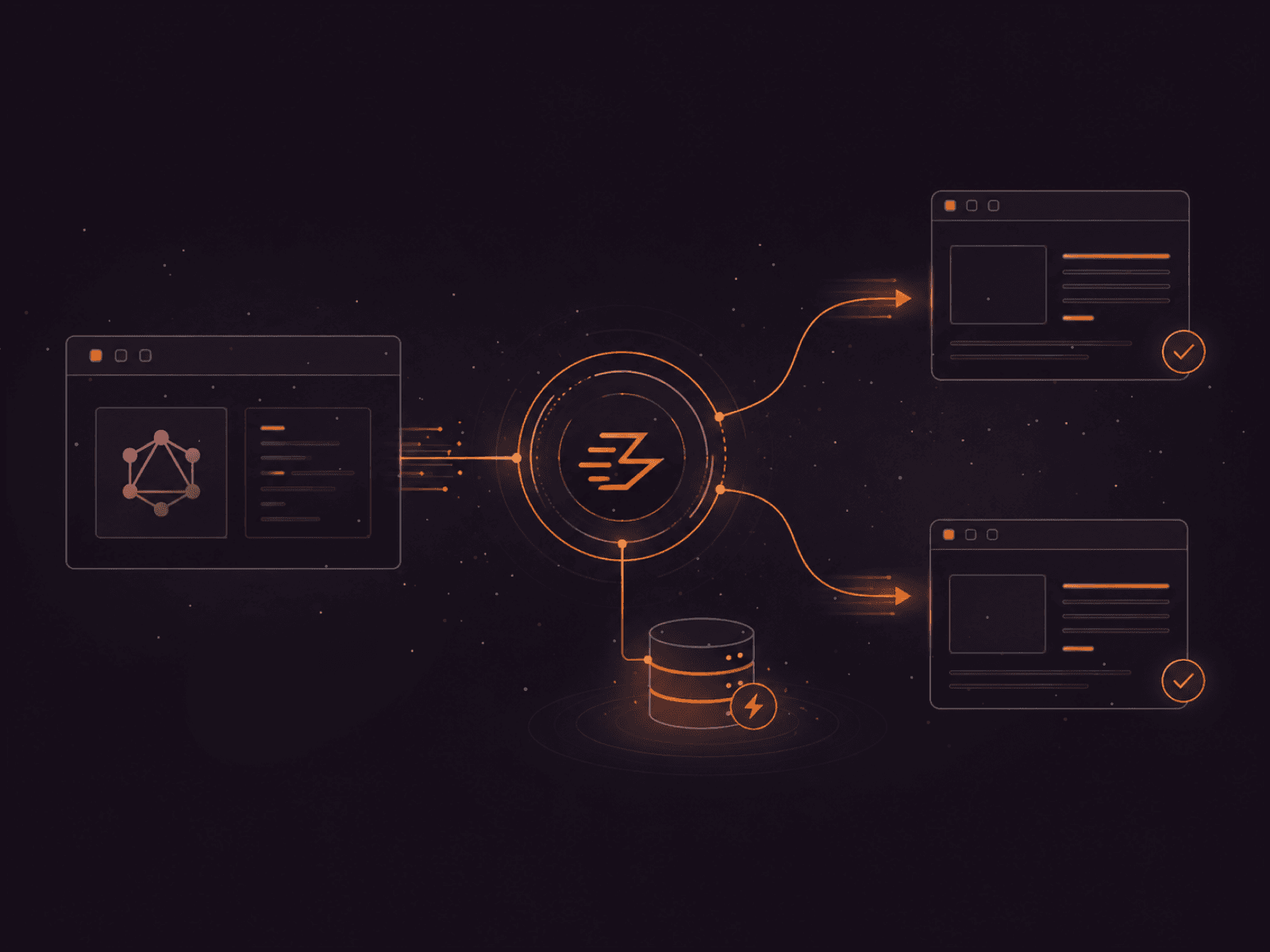
Diagram showing GraphQL input, a central processing hub, database interaction, and two successful outputs.
GraphQL Proxy and Caching at the Edge

Running compute at the edge means you can transform and optimize content before it reaches your users — with sub-millisecond cold starts and no additional infrastructure. Every FastEdge worker runs on WebAssembly, providing sandboxed, predi

Subscribe to our newsletter

Get the latest industry trends, exclusive insights, and Gcore updates delivered straight to your inbox.